
July 18, 2025 16:09
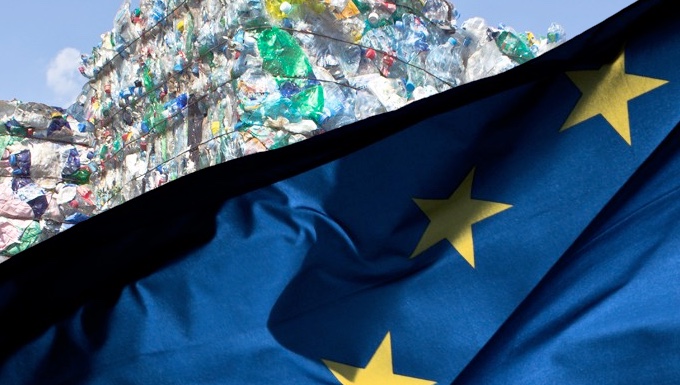 The draft 2028–34 Multiannual Financial Framework (MFF) unveiled by the European Commission includes a higher EU plastics tax under the “own resources” chapter: the rate would climb from €0.80 to €1 per kilogram of non-recycled plastic packaging waste in the member states.
Introduced in 2021 as a direct revenue stream for the EU budget, the levy is not paid by packaging producers, users or consumers. Instead, each member state remits the difference between the weight of plastic packaging waste generated in a given year and the weight recycled in the same period. Beyond its fiscal role, the tax is meant to spur recycling and curb production of unrecoverable plastics.
The rise is explained by the need to index the tax to inflation. For the same reason, the Commission proposes to adjust the rate annually for inflation rather than at each budget renewal.
At the current €0.80 rate, the EU plastics tax generated almost €7.2 billion in 2023, roughly 4% of total EU revenue. Raising the rate to €1/kg should lift takings proportionally to more than €9 billion a year, provided the volume of non-recycled plastic remains steady.
Using the same mechanism, the Commission plans to introduce a new levy on non-recycled waste electrical and electronic equipment (WEEE), set at €2 per kilogram and likewise indexed annually to inflation, with revenue expected to reach around €15 billion a year.
See also: Council Decision on the system of own resources of the European Union and repealing Decision (EU, Euratom) 2020/2053 (PDF).
© Polimerica - Reproduction prohibited, all rights reserved

