
August 31, 2026 17:34
 The European regulatory framework risks slowing investment in new recycling technologies just as the EU is seeking to increase circularity and recycled content in plastics.
This is the central argument of a white paper published by PlasticsEurope, the European association of plastics manufacturers, which is calling for more predictable rules based on environmental outcomes rather than individual technologies.
“Europe faces a striking contradiction,” PlasticsEurope argues. “It calls for innovation, but too often regulates the circular economy through frameworks designed only around technologies that already operate at scale.”
According to the association, the impact is also evident in the figures. Based on estimates in the Circular Economy for Plastics 2026 report, covering the EU27+3 region, the annual growth rate of post-consumer recycled plastics, including both mechanical and chemical recycling, fell from 12.3% in 2018-2022 to 1.9% between 2022 and 2024, when output reached 8.1 million tonnes, equivalent to 14.7% of European production. At global level, over the same period, the growth rate rose from 4.4% to 7.8%.
 The document identifies five main barriers and proposes five corresponding areas for action, with particular attention to chemical recycling, which it considers complementary to, rather than an alternative to, mechanical recycling, especially for managing mixed, contaminated or difficult-to-treat waste streams.
The first obstacle identified by the association is the delay in regulatory recognition of emerging technologies, particularly chemical recycling. In some areas, uncertainty remains over the definition of mass balance, end-of-waste status and waste shipments. The paper calls for rules to be defined before investment decisions are made and to remain stable over time.
The second issue is a regulatory approach considered too closely tied to individual technologies rather than outcomes: greater use of recycled materials, reduced landfill and incineration, lower systemic greenhouse gas emissions, substitution of primary raw materials, improved resource efficiency and stronger European industrial resilience. The proposal is to move towards technology-neutral criteria based on environmental outcomes and the use of recycled material.
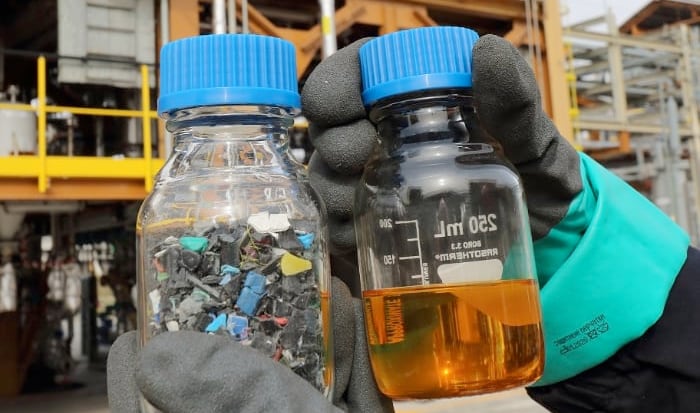 The third problem is what the paper defines as “proof before scale”. Technologies that are still at different stages of industrial maturity are being asked to provide data on energy consumption, environmental performance and efficiency that, in some cases, can only be obtained reliably after commercial scale has been reached. The white paper therefore proposes progressive verification requirements tailored to the level of technological maturity, allowing plants to scale up and update their performance data during industrial development.
According to PlasticsEurope, these obstacles are compounded by regulatory fragmentation across packaging, waste, single-use plastics, end-of-life vehicles, food contact materials and industrial emissions, with requirements that the association considers not always consistent in terms of eligibility for recycled-content claims, accounting, sustainability criteria, authorisation, waste status, shipments or permitting. The white paper instead calls for simpler authorisation procedures and consistent rules across the entire value chain.
Finally, there is the market issue. According to the white paper, current demand for recycled material is insufficient to support the investments needed to meet future targets. The association attributes the sector’s difficulties not only to regulatory uncertainty, but also to weak demand, costs and import pressure. It is therefore calling for temporary demand-support measures, greater certainty over recycled-content calculation methods and equivalent conditions for imported products. The aim is to make the plants that will be needed tomorrow investable today.
See also: Europe cannot deliver a circular plastics economy without enabling innovation
© Polimerica - Reproduction prohibited, all rights reserved

