
July 10, 2025 16:28
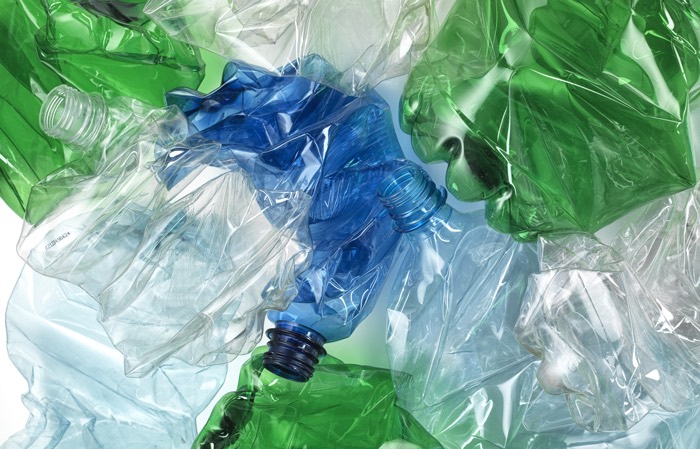 After a long wait from the packaging and plastics sectors, the European Commission has clarified that chemical recycling may be tallied toward recycled-content targets, starting with PET beverage bottles covered by the Single-Use Plastics (SUP) Directive.
The Commission has launched a public consultation — running until Aug. 19 — on a new draft decision that sets out the rules for calculating, verifying and reporting the recycled-plastic content of single-use beverage bottles.
The text would repeal Implementing Decision (EU) 2023/2683, which recognized only mechanical recycling.
For the first time at EU level, the draft also regulates chemical recycling, a technology many see as essential to meeting the SUP’s ambitious recycled-content goals. To reach its recycling objectives, the EU backs all recycling technologies that are preferable to incineration or landfilling, the document notes. Mechanical recycling is generally favored because it is less polluting and more energy-efficient than chemical recycling. However, where mechanical recycling is not feasible — or higher quality standards are required, as with food-contact packaging — chemical recycling offers a valuable alternative.
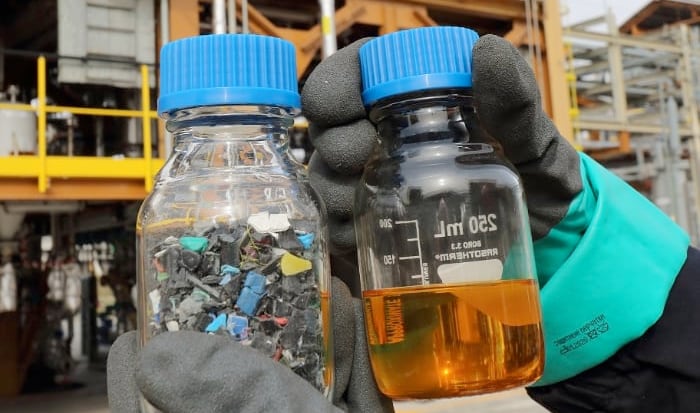 The scope is limited to post-consumer plastic waste. Article 7 introduces a mass-balance methodology in its “fuel-use exempt” version, which excludes from the count both process losses and any waste fraction destined for fuel production or energy recovery. For liquid or gaseous “dual-use” outputs — streams that can be turned into either fuels or chemicals — only the proven non-fuel share is credited, while solid dual-use outputs (char) are excluded altogether.
Further provisions cap the mass-balance accounting period at three months and forbid negative balances. Attribution is plant-specific: no transfers between sites or companies are allowed. Special cases are covered, such as liquid feedstocks sent to steam crackers, where an allocation method based on boiling-point curves applies.
Depolymerization is not explicitly named, but in general, if the eligible-material proportion of an output stream is known at a calculation point where no mass balance has yet been applied, the eligible weight for each lot equals that percentage multiplied by the lot’s weight.
 The rules aim to balance transparency with administrative burden for companies and national authorities. Independent third-party verification is required annually for the most complex stages of the value chain — namely chemical recycling — while small and medium-sized enterprises face audits every three years. Companies will be responsible for checking self-declarations by their business partners, and national authorities will carry out risk-based controls.
This is the EU’s first framework for counting chemically recycled content. The methodology set out in the draft, the Commission explains, will serve as a model for future recycled-content rules in other areas such as packaging (PPWR), automotive end-of-life vehicles (ELV) and textiles.
Stakeholders can submit comments on the draft implementing act until Aug. 19, 2025. After reviewing the feedback, the Commission will present the final text to a technical committee of member state representatives for a vote, with adoption expected in fall 2025.
© Polimerica - Reproduction prohibited, all rights reserved

