
September 10, 2025 12:24
 In a plenary vote held yesterday, the European Parliament approved its negotiating position on the revision of the End-of-Life Vehicles Regulation (ELVR), with 431 votes in favor, 145 against and 76 abstentions. The proposed rules aim to boost circularity across the automotive lifecycle—from design to dismantling and recycling.
The new rules stipulate that plastics used in new vehicles must contain at least 20% recycled material within six years of the regulation’s entry into force, rising to 25% within 10 years, if enough recycled plastic is available at non-excessive prices.
The Parliament’s version sits between the original Commission proposal (25% recycled content within six years) and the Council’s three-phase plan (15% within six years, 20% in eight and 25% after 10 years).
Parliament also called for binding recycled content targets for steel, aluminum and their alloys, and for car manufacturers to take responsibility for the collection and treatment costs of end-of-life vehicles, starting three years after the regulation becomes effective.
Another key provision is the ban on exports of vehicles classified as end-of-life, with a clear legal distinction to be established between used cars and ELVs.
 Reacting to the vote, Virginia Janssens, managing director of PlasticsEurope, welcomed the 20% target but pushed for the original Commission proposal: “The European Parliament’s support for a 20% recycled target in new vehicles is a step forward. However, a 25% target, as proposed by the Commission, will ensure that the End-of-Life Vehicles Regulation can foster a scalable, circular and competitive plastics industry in Europe. We urge negotiators to raise their ambition during the upcoming trialogues.”
Janssens also criticized the exclusion of bio-based plastics from the scope of the regulation: “This would be a missed opportunity. Today, plastics from biomass make up just 1% of material use by converters, largely due to high costs and weak policy support. A future-proof target must include plastics from sustainable sources like bio-based feedstocks. However, to prioritize recycling, we recommend limiting the contribution of bio-based and carbon capture–based plastics to no more than 5% of the overall target; a balanced approach we hope to see reflected in the final legislation.”
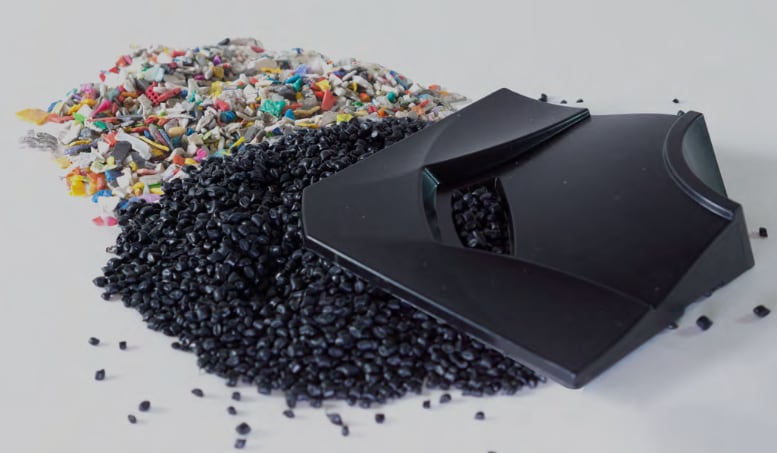 EuRIC, the European Recycling Industries’ Confederation, took a more critical stance. In an official statement, the organization warned that the Parliament’s amendments fall short of enabling a truly circular automotive sector: “EU recyclers warn that the EU Parliament’s adopted amendments on the End-of-Life Vehicles Regulation fall short of what is needed to deliver on automotive circularity. By watering down the concrete measures aimed at increasing circularity, such as the plastic recycled content target, the Parliament’s approach risks missing the mark and weakening Europe’s competitiveness.”
While welcoming technology-neutral dismantling rules and stronger representation in producer responsibility organizations (PROs), EuRIC expressed concern over the inclusion of pre-consumer waste and elastomers in the recycled content targets, and the lack of a mirror clause for imports, which would expose EU industry to unfair competition.
“A review clause adds further uncertainty, undermining investment decisions in a sector already under severe strain,” EuRIC noted. “We urge co-legislators to raise ambition, strengthen targets, close loopholes and restore investor confidence so that the ELVR can truly deliver on Europe’s circular and climate goals.”
The trialogue negotiations between the Parliament, Commission and Council are expected to begin shortly, with the aim of adopting a final version of the regulation in 2026.
© Polimerica - Reproduction prohibited, all rights reserved

